Custom Baseball Uniform Pattern: Design Ideas and Templates
Designing a custom baseball uniform involves careful consideration of pattern placement, color balance, and jersey style to ensure team names and numbers stand out clearly. Using design templates and tools like Genre Sports’ 3D customizer can help teams create and visualize uniforms that meet their branding and league requirements.
Designing a baseball uniform requires more thought than simply choosing a jersey color. The placement of the team name, logo, player numbers, and other details all affect how the finished uniform looks. The pattern also needs to work with the jersey's shape, including its sleeves, collar, buttons, and seams.
Some teams already have a clear idea of the design they want, while others need to explore different options before making a decision. Looking at existing baseball uniform patterns and design templates can help with this process. They provide a starting point for comparing styles and understanding how different design elements work together.
In this guide, we'll cover different custom baseball uniform pattern ideas, explain how to use design templates, and show how you can create a baseball uniform with Genre Sports.
Popular Custom Baseball Uniform Pattern Ideas
The right pattern depends on the look your team wants to achieve. Some teams prefer a simple design that keeps the focus on their name and logo, while others want more detailed graphics. Here are five design styles worth considering.
1. Pinstripe Patterns
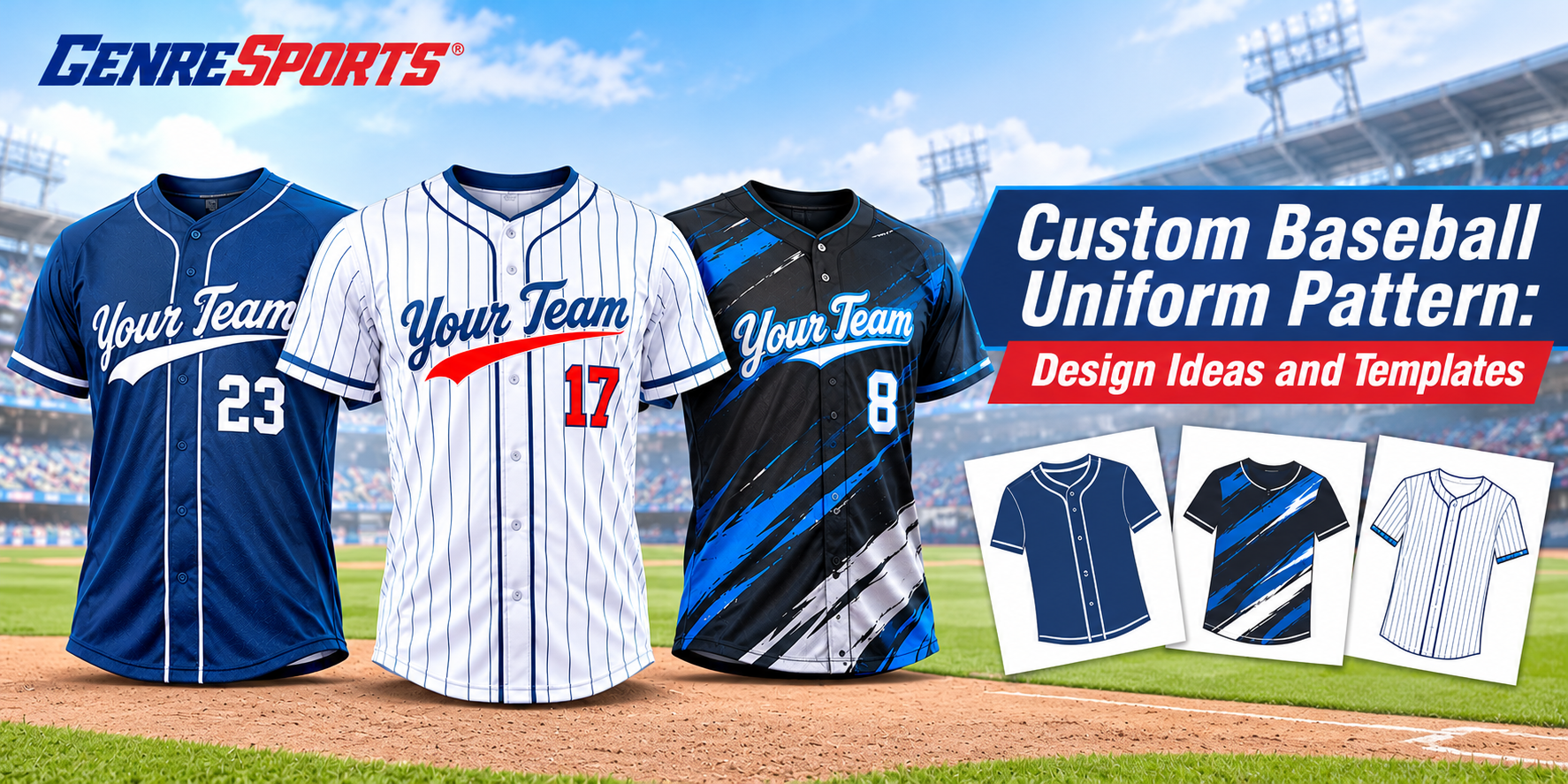
Pinstripes are a familiar feature of traditional baseball uniforms. They consist of thin vertical lines that run down the jersey, usually against a solid background. This style gives a jersey a classic baseball appearance without requiring too many additional graphics.
White jerseys with navy or black pinstripes are common choices, but you can use other color combinations to match your team's branding. The width and spacing of the stripes can also be adjusted to change the overall look.
If you choose a pinstripe design, pay attention to how the lines work with the team name and player numbers. A simple layout with contrasting lettering can keep everything easy to read.
2. Geometric Patterns
Geometric patterns use shapes, angles, and lines to create a more contemporary jersey design. They can be used across the entire garment or placed on selected sections, such as the shoulders, sleeves, and sides.
For example, you could use angular shapes in your team's primary and secondary colors or add diagonal lines to create a more detailed look. Repeating a particular shape or graphic across the jersey can also help tie the design together.
The main thing to consider is balance. Too many graphics can make it difficult to distinguish the team name and numbers from the background. Keeping the main details in clear areas can help avoid this problem.
3. Gradient Patterns
A gradient pattern gradually blends one color into another. Instead of using separate blocks of color, it creates a smooth transition across the jersey.
A few possible combinations include navy fading into royal blue, red blending into black, or two shades of green moving from light to dark.
You can apply a gradient to the full jersey or use it on specific sections. For example, a solid-colored upper section with a gradual color transition toward the bottom can create a different look without making the entire design too detailed.
When choosing gradient colors, consider how the team logo, lettering, and numbers will stand out against them.
4. Camouflage Patterns
Camouflage patterns use irregular shapes in different colors to create a distinctive appearance. Although traditional camouflage usually features earthy shades, teams can use their own color combinations to make the design fit their branding.
For example, a baseball jersey could feature navy, grey, and white camouflage or use shades of green alongside a contrasting team color.
You do not have to cover the entire jersey with camouflage. Using it on the sleeves, shoulders, or side panels can add detail while leaving the chest and back clear for team names and numbers.
5. Retro-Inspired Patterns
Retro-inspired designs take ideas from traditional baseball uniforms. They often use vintage lettering, simple trim, contrasting sleeve bands, and familiar color combinations.
A cream jersey with maroon lettering, for example, can give the uniform a vintage appearance. You could also use traditional script lettering across the chest with simple sleeve details.
This style does not need to look like an exact copy of an older uniform. Combining classic elements with your team's current colors and logo can create a design that feels traditional while still representing your team.
Baseball Uniform Design Templates
A baseball uniform design template gives you a layout to work with when planning your jersey. It helps you see where the team name, logo, player numbers, and other graphics will appear.
Templates can come in different forms. Some show pre-designed jersey styles that you can customize, while others are blank artwork layouts supplied by a manufacturer. Blank templates may show the individual garment panels and the areas available for printing.
Both can be useful, depending on where you are in the design process.
A pre-designed template helps you compare different looks without creating everything from the beginning. You can explore color combinations, lettering styles, and graphic placement before selecting a design.
A blank artwork template is more useful when preparing a design for production. It gives you a guide for placing graphics within the correct garment areas and helps you account for seams, edges, and other construction details.
Before choosing a template, check a few things:
- Jersey style: Make sure the template matches the type of jersey you plan to order, such as a full-button, two-button, or V-neck style.
- Front and back views: Check how the team name, logo, player name, and numbers will appear on both sides.
- Available design space: Make sure important graphics will not overlap with buttons, seams, or other garment details.
- Color and contrast: Check that names and numbers are easy to distinguish from the background.
- Uniform matching: Consider how the jersey design will look with the baseball pants and other team apparel.
It is also important to check your league's uniform requirements before approving the design. For example, NFHS high-school baseball rules include requirements for consistent team uniforms and contrasting player numbers. Requirements can differ between leagues and governing bodies.
Genre Sports offers pre-designed baseball jersey options that teams can browse for inspiration. You can explore different designs, choose a suitable starting point, and personalize the uniform with your team details.
Create Your Own Baseball Uniform Design With Genre Sports
A pre-designed template is a useful starting point, but it may not include every detail you have in mind. Perhaps you want a different arrangement of colors, a particular graphic across the sleeves, or a design that is completely different from the available options.
Genre Sports offers a 3D customizer with AI design features to help you develop your own baseball uniform.
You can describe the design you have in mind, including the jersey colors, preferred pattern, and overall appearance. Based on your description, the AI generates three different design options.
Review the options and select the one that comes closest to your idea. You can then use the available AI features to make further changes until the design looks right.
Once you are happy with the result, preview the uniform in 3D. Viewing it from different angles helps you check how the design looks on the front, back, and other sections of the garment.
Before finalizing the artwork, pay particular attention to the placement of the team name, logo, and player numbers. These details should remain clear and should not get lost among the graphics.
How Sublimation Printing Brings Baseball Patterns to Life
After finalizing a baseball uniform design, the next consideration is how it will be printed on the fabric. Dye sublimation is commonly used for custom sports uniforms because it supports detailed, full-color artwork across compatible polyester fabrics.
The process uses special sublimation ink and transfer paper. First, the design is printed onto the transfer paper. Heat and pressure are then applied to transfer the dye into the polyester fibers, where it becomes part of the material rather than forming a separate layer on top.
This makes sublimation suitable for many of the design styles discussed above. For example, it can be used to produce:
- Detailed line patterns: Print pinstripes, diagonal lines, and other fine graphics.
- Multiple-color designs: Combine different colors and shapes within the same artwork.
- Gradient effects: Create gradual transitions between colors.
- Camouflage graphics: Reproduce detailed patterns across different uniform sections.
- Team details: Include team names, logos, player names, and numbers in the overall design.
However, there are a few things to understand before choosing sublimation printing.
The process works best on white or light-colored polyester fabric. Sublimation printing does not use white ink, so white areas in the artwork show the original fabric color. It is also not suitable for ordinary cotton fabric. Polyester content and fabric quality can affect the final appearance of the print.
Artwork preparation is equally important. The design needs to account for the jersey's shape, seams, buttons, sleeves, and printing areas. Keeping important details away from seam allowances and garment edges helps prevent logos, lettering, or other graphics from being misplaced during production.
For these reasons, reviewing the final artwork and garment layout before production is an important step.
Final Thoughts
A good baseball uniform design needs to look right on the garment, not just on a computer screen. The pattern should work with the jersey style, the team's colors should complement each other, and important details such as the team name and player numbers should remain easy to read.
Design templates can help you explore different layouts, while a customizer gives you more freedom to develop an idea that matches your team's requirements.
Genre Sports offers pre-designed baseball uniform options and a 3D customizer with AI design features to help you explore and personalize your design.
Explore custom baseball uniforms from Genre Sports to find a suitable starting point for your team's next uniform.
Frequently Asked Questions
1. Which pattern is best for a custom baseball uniform?
The right pattern depends on your team's colors, logo, and overall design preferences. Consider how the pattern will look with the team name, player numbers, and other jersey details. A well-balanced design should complement your team's branding without making the uniform look too crowded.
2. Can I use a baseball uniform template to create my own design?
Yes. You can start with an existing design template and change its colors, graphics, lettering, and team details. You can also use a blank artwork template to prepare a custom design according to the manufacturer's requirements.
3. Can I create a custom baseball uniform pattern from scratch?
Yes. You can create a pattern using your preferred colors, shapes, lines, and graphics. Genre Sports also offers an AI-powered 3D customizer where you can describe your design idea and get three different design options. You can choose one and make further changes to get the look you want.
4. Can sublimation printing reproduce detailed baseball uniform patterns?
Yes. Sublimation printing can reproduce detailed, full-color artwork on compatible polyester fabrics. It is suitable for designs such as pinstripes, gradients, camouflage, and geometric graphics. The fabric color and polyester content should be considered when preparing the artwork.
5. Can I use sublimation printing on cotton baseball jerseys?
Conventional dye sublimation is not suitable for ordinary cotton fabric because the dye bonds with polyester fibers rather than cotton. For sublimated baseball uniforms, polyester or suitable polyester-rich fabric is generally the better choice.