The Complete Guide to DTF Printing in Las Vegas
DTF printing is a versatile method that prints designs onto a special film, which is then heat-pressed onto various fabrics like cotton, polyester, and blends. This guide covers the DTF process, materials, benefits, and how to choose a supplier for custom apparel in Las Vegas.
Custom apparel printing is used by sports teams, schools, businesses, clothing brands, and print shops. From team jerseys and company uniforms to promotional T-shirts and branded hoodies, businesses need printing methods that can handle different designs and garment types.
One method that has become popular in the apparel industry is direct-to-film (DTF) printing. It allows designs to be printed onto a special film and transferred onto clothing using heat and pressure.
DTF printing is useful for producing colorful designs, detailed logos, and custom artwork. It also gives businesses the option to order ready-to-press transfers without investing in their own printing equipment.
Whether you run a print shop, manage a sports team, sell custom clothing, or need apparel for an event in Las Vegas, understanding DTF printing can help you make better decisions.
This guide explains how DTF printing works, the materials used, its benefits and limitations, and what to consider when choosing a DTF transfer supplier.
What Is Direct-to-Film (DTF) Printing?
Direct-to-film printing is a process in which a design is printed onto a special PET film and then transferred onto fabric using a heat press.
Unlike direct-to-garment (DTG) printing, which prints directly onto clothing, DTF printing creates the design on a film first. A special adhesive powder is applied to the printed design and heated. The prepared transfer is then pressed onto the garment.
One of the main reasons businesses use DTF printing is its ability to produce detailed, full-color designs on different compatible fabrics. It can be used for cotton T-shirts, polyester sportswear, hoodies, uniforms, and other apparel.
For example, a sports team can use DTF transfers for logos, player names, and sponsor graphics. A clothing brand can use them to add custom artwork to its T-shirts and hoodies.
Another advantage is that businesses can purchase ready-to-press DTF transfers from a supplier and apply them when needed. They do not need to own a DTF printer to use this printing method.
How Does the DTF Printing Process Work?
The DTF printing process involves several steps. Each step helps prepare the design so it can be transferred properly onto the garment.
1. Artwork Preparation
The process starts with preparing the design. It could be a company logo, team name, player number, illustration, or custom graphic.
The artwork is adjusted to the required size and prepared using suitable printing software. The design is generally printed in reverse on the film so that it appears correctly after transfer.
Good-quality artwork helps produce clear designs with proper details and colors.
2. Printing on PET Film
The prepared design is printed onto a special PET (polyethylene terephthalate) film using DTF-compatible inks.
The printer uses CMYK inks to create the colors and a white ink layer to provide a solid base. White ink is especially important when transferring designs onto dark garments because it helps prevent the fabric color from showing through the artwork.
3. Applying Adhesive Powder
After printing, a special hot-melt adhesive powder is applied to the printed areas while the ink is still suitable for bonding.
The powder sticks to the printed ink. Any excess powder is removed so that it does not remain in unwanted areas of the transfer.
This adhesive is what helps the design attach to the fabric during heat pressing.
4. Curing the Adhesive
The printed film is heated to melt the adhesive powder and prepare it for transfer.
This step is called curing. Proper curing is important because the adhesive needs to be ready to bond with the garment during application.
5. Heat Pressing the Transfer
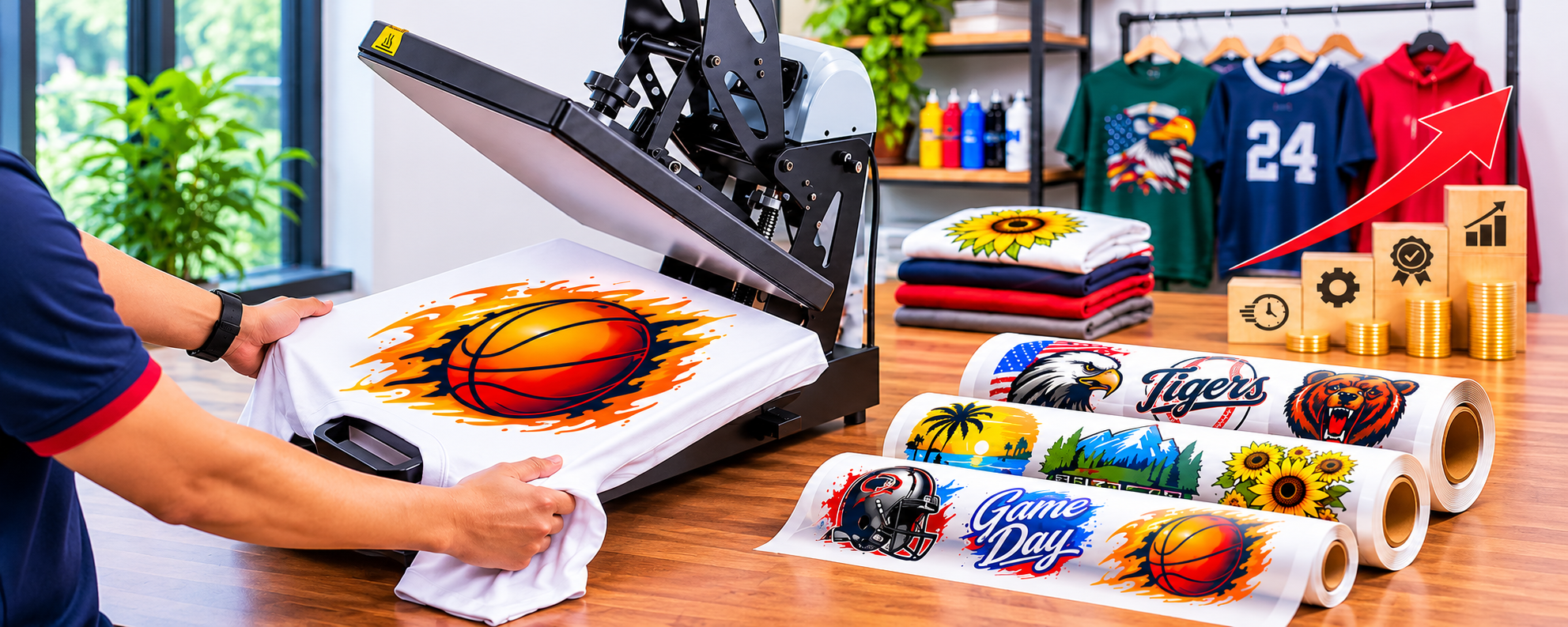
The prepared film is placed on the garment in the required position. A heat press applies the specified temperature, pressure, and time to transfer the design onto the fabric.
The correct settings depend on the transfer materials and garment. Following the supplier's instructions is important for achieving a good result.
6. Peeling the Film
After pressing, the film is removed according to its peel type. DTF transfers may use hot peel, warm peel, or cold peel.
Some transfers also require a second press after removing the film to help finish the design.
Once the process is complete, the printed design remains attached to the garment.
What Materials Are Used in DTF Printing?
DTF printing uses a combination of materials to create the finished transfer. Each material has a specific purpose.
- PET Film: This is the special film on which the design is printed. It holds the artwork until it is transferred onto the garment.
- DTF Inks: CMYK inks create the design's colors, while white ink provides a base for printing on different garment colors.
- Adhesive Powder: This powder helps bond the printed design to the fabric when heat is applied.
- Curing Equipment: An oven or suitable curing setup heats the adhesive powder before the transfer is applied.
- Heat Press: This equipment applies the heat and pressure needed to attach the design to the garment.
Using compatible materials is important. The ink, film, adhesive powder, and curing process need to work together to produce consistent transfers.
What Fabrics Can Be Used for DTF Printing?
DTF printing works with many common apparel fabrics, which makes it useful for different clothing products.
Cotton: Cotton is commonly used for T-shirts, hoodies, and casual clothing. DTF transfers can be applied to suitable cotton garments for logos, artwork, and other designs.
Polyester: Polyester is widely used for sports jerseys, team uniforms, and performance apparel. DTF transfers can be applied to compatible polyester fabrics, but care is needed because some polyester garments are sensitive to high temperatures.
Cotton-Polyester Blends: These fabrics combine cotton and polyester and are commonly used for uniforms, promotional clothing, and everyday apparel.
Some nylon and specialty fabrics may also support DTF transfers when the correct adhesive and application method are used.
However, not every transfer works on every fabric. Water-resistant coatings, fabric treatments, and heat sensitivity can affect the results. Testing a sample before starting bulk production is always recommended.
What Are the Benefits of DTF Printing?
DTF printing offers several benefits for businesses involved in custom apparel and garment decoration.
Detailed and Colorful Designs
DTF printing can reproduce colorful artwork, gradients, logos, and detailed graphics. This makes it useful for team branding, sponsor logos, company designs, and custom clothing artwork.
Small and Large Orders
DTF printing is suitable for both small projects and larger production requirements. Businesses can order individual transfers or multiple designs together. Suppliers offering no-minimum ordering make it easier for startups and smaller print shops to manage their requirements.
Ready-to-Press Transfers
Businesses can purchase finished DTF transfers and apply them later using a heat press. This is useful for print shops that handle different customer orders and want to keep transfers ready for production.
More Customization Options
DTF transfers can be used for different logos, names, numbers, and artwork. This makes them useful for sports teams, schools, events, and businesses that need personalized apparel.
Opportunities for Print Shops
Print shops can purchase ready-to-press transfers instead of managing the complete DTF printing process themselves. They can focus on applying designs to garments and handling customer orders.
For more ideas, read our guide on increasing profits with DTF transfers for print shops.
What Is a DTF Gang Sheet?
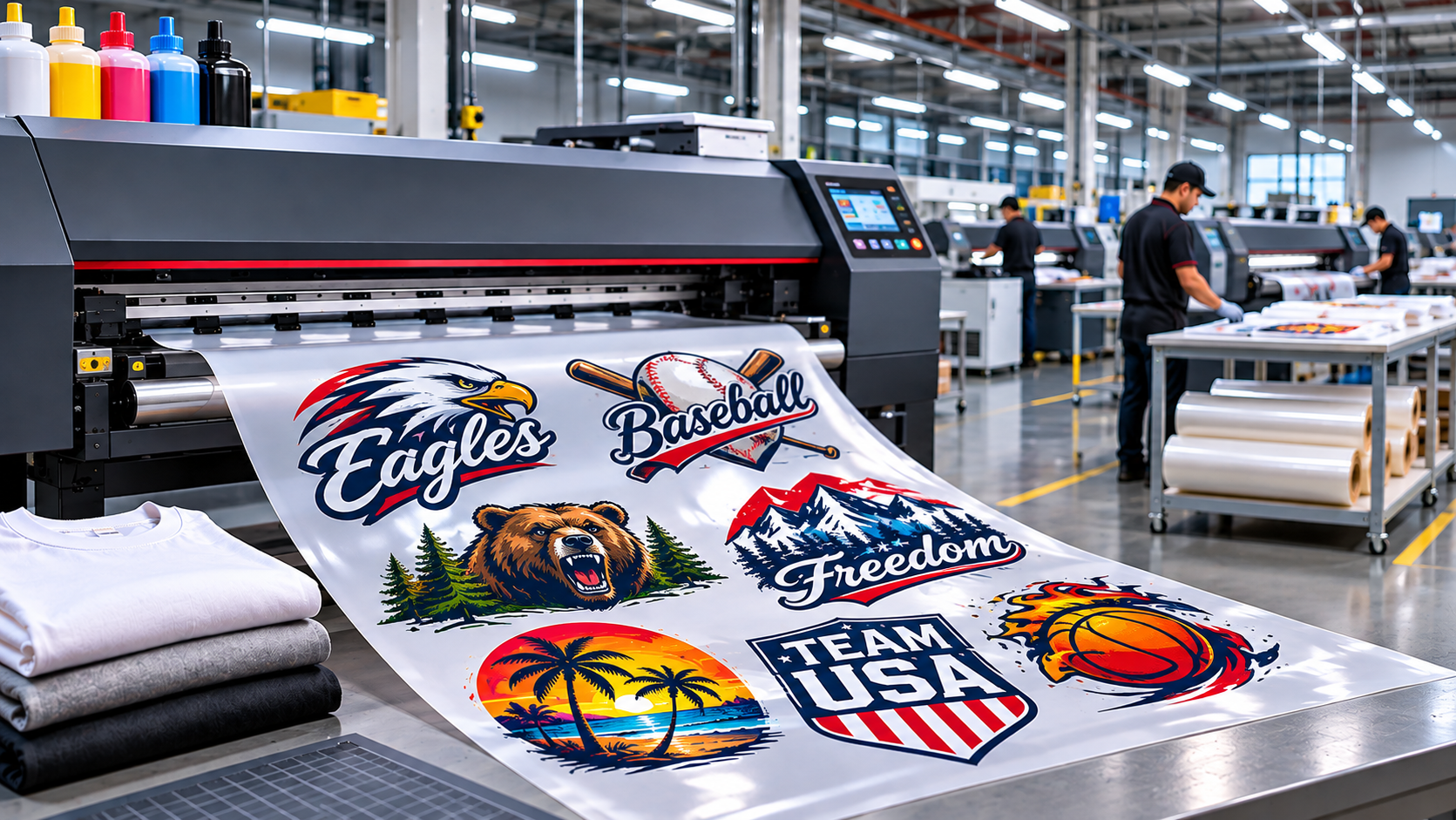
A DTF gang sheet is a single sheet or roll of transfer film containing multiple designs arranged together for printing.
Instead of printing each design separately, businesses can place several designs within the available film area. After printing, the designs can be cut apart and applied to different garments.
For example, a print shop handling orders for several customers can arrange different logos, names, and artwork on one gang sheet.
Businesses can prepare their gang sheets in two ways. If you have already arranged your designs, you can Upload Your Own Gang Sheet directly for printing. If you have individual designs that need to be arranged, you can Build a Gang Sheet Online by uploading your artwork, adjusting the design sizes, and placing multiple designs within the available film area.
Gang sheets help businesses make better use of the available film space. They can also help reduce the cost per design, depending on the supplier's pricing.
Before placing an order, check the supplier's available sheet sizes, artwork requirements, and pricing.
DTF Printing vs. Other Apparel Printing Methods
DTF printing is one of several methods used in the apparel industry. Each method works differently and is suitable for different printing requirements.
DTF vs. Screen Printing
Screen printing uses screens to apply ink directly onto garments. It is commonly used for larger orders with the same design. DTF printing is often more convenient for detailed, multicolor artwork and smaller or mixed-design orders.
DTF vs. Sublimation Printing
Sublimation uses heat to transfer dye into compatible materials, usually polyester. The dye becomes part of the fabric, so the printed area does not have a separate transfer layer. DTF uses adhesive to attach the design to the garment. It can be used on a wider range of fabric types, provided they are compatible.
DTF vs. DTG Printing
DTG stands for direct-to-garment printing. It prints ink directly onto the clothing using a specialized printer. DTF prints the design on film first and transfers it later. DTG is commonly used for detailed prints on cotton garments, while DTF offers more flexibility for ready-to-press transfers and different compatible fabrics.
DTF vs. Heat Transfer Vinyl
Heat transfer vinyl uses cut pieces of vinyl that are pressed onto garments. It is commonly used for names, numbers, and simple designs. DTF is generally more suitable for detailed artwork and full-color designs because the image is printed rather than cut from separate vinyl pieces.
The right printing method depends on the fabric, design, order quantity, budget, and expected finish.
How Much Does DTF Printing Cost in Las Vegas?
The cost of DTF printing in Las Vegas depends on the size of the transfer, order quantity, gang sheet dimensions, and supplier.
A small logo transfer will generally require less printing material than a large back design. Similarly, combining several designs on a gang sheet can help reduce the cost per design compared with ordering them separately.
Other factors that affect pricing include:
- Quality of the film, inks, and adhesive powder.
- Number and size of designs.
- Bulk order quantities.
- Standard or rush production.
- Shipping method and delivery location.
When comparing suppliers, consider print quality and the cost per design rather than choosing only the lowest total price.
How to Choose a DTF Printing Supplier in Las Vegas
Choosing a reliable supplier is important for businesses that depend on regular apparel production. Before placing an order, consider these points.
Check Print Quality: Look for clear designs, consistent colors, and properly prepared transfers. Ordering a sample can help you check the quality before placing a larger order.
Ask About Production Time: Check whether the supplier offers standard, same-day, or rush production. Confirm whether the quoted time covers production only or includes shipping.
Compare Pricing: Check prices for individual transfers, gang sheets, and bulk orders. Also ask about minimum order requirements.
Check Gang Sheet Options: If you operate a print shop, look for suppliers that allow you to upload your own gang sheet or build one online.
Look for Reliable Support: A good supplier should be able to answer questions about artwork, fabric compatibility, ordering, and application.
For more detailed advice, read our guide on choosing the right DTF transfer supplier.
Why Choose Genre Sports for DTF Transfers in Las Vegas?
Genre Sports is a custom apparel manufacturer with production from its Las Vegas, Nevada, factory. Along with custom sportswear and apparel manufacturing, we supply DTF transfers to print shops, clothing brands, apparel businesses, and other customers across the USA.
We focus on providing quality transfers, competitive pricing, and convenient ordering options.
Our DTF transfer services include:
- Made in USA: Transfers produced at our Las Vegas facility.
- Same-Day Service: Production options for eligible orders.
- No Minimum Order: Suitable for small projects and larger requirements.
- Hot Peel Transfers: Ready for application according to the specified instructions.
- Accurate Colors: Clear designs and colorful prints.
- Premium Materials: Quality inks and transfer film.
- Competitive Pricing: Options for individual buyers, print shops, and bulk customers.
- Quick West Coast Shipping: Shipping options for businesses across the western USA.
Whether you run a print shop, manage a clothing brand, or need transfers for custom apparel, Genre Sports provides DTF transfer solutions for your business.
Visit our DTF Transfers in Las Vegas page to learn more.
Frequently Asked Questions About DTF Printing
What is DTF printing used for?
DTF printing is used to transfer custom designs, logos, and artwork onto clothing. Common applications include T-shirts, sports jerseys, hoodies, uniforms, promotional apparel, and branded merchandise.
Is DTF printing suitable for sports jerseys?
Yes. DTF transfers can be applied to many compatible polyester sports jerseys. However, some performance fabrics are sensitive to heat, so checking compatibility and testing before bulk production.
Can DTF transfers be used on cotton and polyester?
Yes. DTF transfers can be applied to many cotton, polyester, and blended fabrics. The correct transfer and application settings depend on the garment material.
Do I need a DTF printer to use DTF transfers?
No. You can purchase ready-to-press DTF transfers from a supplier and apply them using a compatible heat press. This allows print shops and apparel businesses to offer DTF printing without owning a DTF printer.
Can I order DTF transfers without a minimum quantity?
Yes. Some suppliers offer no-minimum ordering, allowing businesses to purchase individual transfers or smaller quantities. This is useful for startups, independent designers, and print shops.
How long do DTF transfers last?
The durability of DTF transfers depends on the transfer quality, fabric, application settings, and garment care. Properly produced and applied transfers are designed to withstand regular washing when the supplier's care instructions are followed.
Where can I buy DTF transfers in Las Vegas?
You can purchase DTF transfers from specialized printing suppliers in Las Vegas. Compare print quality, pricing, production time, gang sheet options, and shipping before ordering. Genre Sports produces DTF transfers at its Las Vegas facility.
Final Thoughts
Direct-to-film printing offers a flexible way to produce custom apparel for sports teams, schools, clothing brands, print shops, and businesses. Understanding the printing process, fabric compatibility, and application requirements can help you choose the right solution for your projects.
If you are looking for DTF transfers in Las Vegas, explore Genre Sports. With Made in USA production, no-minimum ordering, same-day service options, and competitive pricing, we support businesses with their custom apparel printing needs.
Explore Genre Sports DTF Transfers and get started with your next order.